
Arabic for Everyday Life in the UAE: 50 Phrases That Actually Come in Handy
Most expats in the UAE never learn Arabic. English gets you through almost everything in Dubai and Abu Dhabi, and the sheer diversity of the population means that on any given day you might interact with people from twenty different countries without a single Arabic word being exchanged. The practical case for learning the language from scratch is genuinely weak for most residents.
But there is a different case to be made for learning a handful of phrases well. Not tourist Arabic, not the formal Modern Standard Arabic taught in classrooms, but the Khaleeji dialect spoken by Emiratis and the blend of Arabic and English that characterises daily life across the UAE. Knowing even fifty phrases changes the texture of your interactions here. It opens doors that stay closed to people who never try. And in a country where hospitality is deeply cultural, the effort of attempting Arabic — however imperfectly — is noticed and appreciated in ways that go beyond the words themselves.
Greetings and Basic Courtesy
Greetings carry particular weight in Emirati culture. Rushing past them is considered rude regardless of how busy you are, and taking an extra ten seconds to greet someone properly sets the tone for everything that follows.
As-salamu alaykum — Peace be upon you. The standard Islamic greeting, used universally across the UAE by Muslims and widely recognised by everyone else. If someone greets you this way, the response is wa alaykum as-salam, meaning and upon you peace.
Marhaba — Hello. The casual, secular greeting that works in any context and with anyone.
Ahlan wa sahlan — Welcome. You will hear this constantly, particularly in shops, restaurants, and from Emirati hosts. Ahlan on its own is an acceptable short form.
Sabah al-khayr — Good morning. The response is sabah an-nur, meaning morning of light.
Masa al-khayr — Good evening. The response is masa an-nur.
Kayf halak — How are you? Directed at a man. Kayf halik is the form for a woman. The standard positive response is al-hamdu lillah, meaning praise be to God, followed by bikhair, meaning fine or well.
Shukran — Thank you. One of the most universally useful words in any Arabic-speaking country. Shukran jazeelan means thank you very much.
Afwan — You are welcome, or excuse me. Context determines which meaning applies.
Min fadlak — Please. Used when making a request of a man. Min fadlik for a woman.
Ma’a as-salama — Goodbye. Literally meaning go with safety. A warm and widely used farewell.
Yalla — Let’s go, come on, hurry up. Technically Arabic but so embedded in UAE English that most residents use it regardless of background. Yalla yalla means move it.
Inshallah — God willing. Used constantly and meaning everything from a genuine expression of hope to a polite deferral that may or may not result in the thing actually happening. Context is everything with inshallah.
Al-hamdu lillah — Thank God, or praise be to God. Used as a response to how are you, as an expression of gratitude, and as a general acknowledgement of good fortune.
At the Shop, Market, and Mall
Bikam hadha — How much is this? The most essential shopping phrase in any language.
Ghali — Expensive. Useful in markets and anywhere negotiation is possible.
Rakhees — Cheap or inexpensive.
Mumkin tkhaffed as-si’r — Can you lower the price? Polite and direct. Works well in the gold souk, the spice souk, and any traditional market.
Abgha hadha — I want this. Simple and effective.
Ma abgha — I do not want it. Equally useful when vendors are persistent.
Wayn as-sanda — Where is the cashier? Helpful in larger traditional shops where the payment area is not obvious.
Mafi mushkila — No problem. You will hear this from shopkeepers and service staff constantly. It is reassuring and useful to say yourself.
Zain — Good, fine, okay. Widely used in the Khaleeji dialect as a general affirmative.
At Restaurants and Cafes
Wayn al-menu — Where is the menu?
Al-hisab, min fadlak — The bill, please. One of the most practically useful phrases in any setting involving food.
Ladheedh — Delicious. Saying this after a meal, particularly in a local or Emirati restaurant, is always well received.
Bidoon — Without. As in bidoon sukkar, without sugar, or bidoon lahm, without meat. Useful for anyone with dietary preferences or restrictions.
Ma’a sukkar — With sugar. The default in Arabic coffee and tea is substantial sweetness, so knowing how to ask for it either way is helpful.
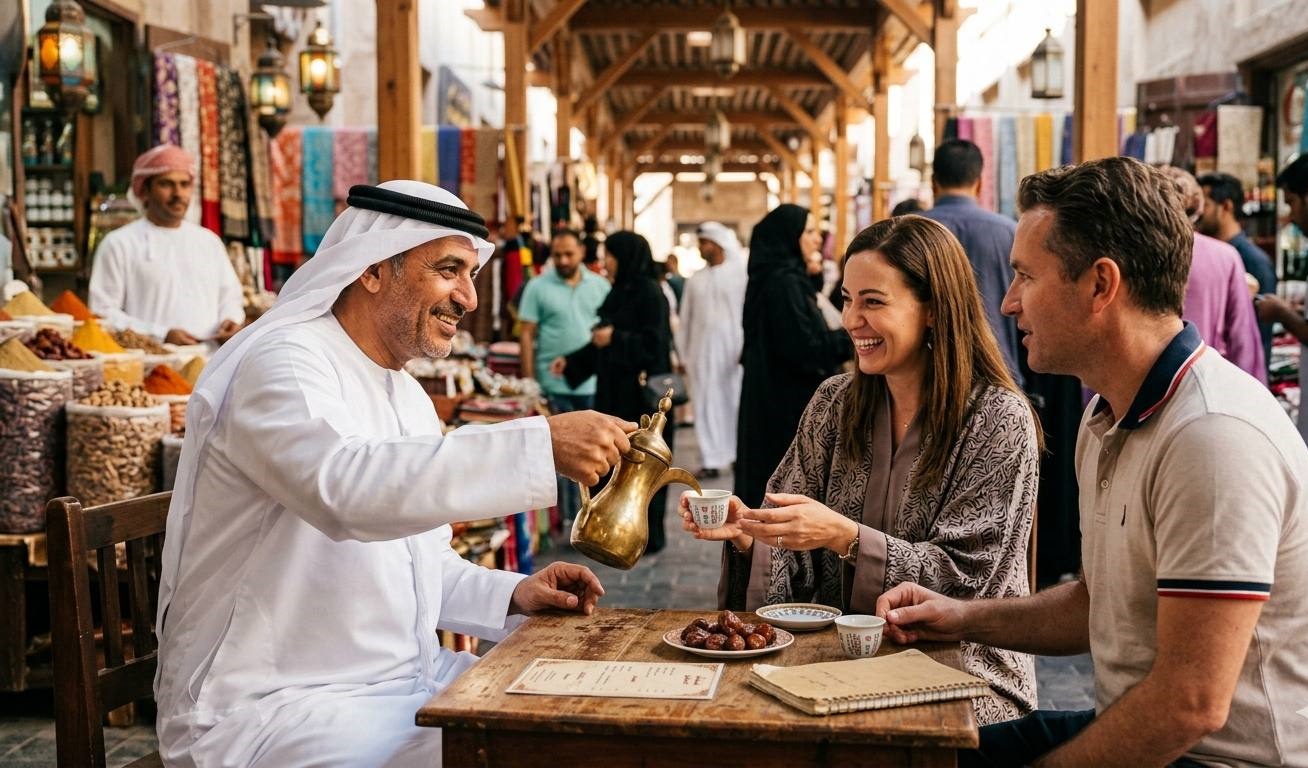
Qahwa — Coffee. Specifically Arabic coffee, the light cardamom-flavoured version served in small cups at Emirati homes, majlises, and traditional cafes. Accepting a cup when offered is a gesture of respect.
Chai — Tea. Used identically in Arabic and across South Asian languages spoken by a large portion of the UAE population.
May — Water. Simple and essential.
Mumkin akhadh hadha ma’i — Can I take this with me? For takeaway orders.
Getting Around
Wayn — Where. The single most useful directional word. Wayn al-hammam means where is the bathroom, which covers one of the most universal human needs.
Yasaar — Left.
Yameen — Right.
Seedha — Straight ahead.
Waqif — Stop. Useful in taxis when you need the driver to pull over.
Kam al-waqt — What time is it?
Wayn al-taxi — Where is the taxi?
Mumkin twaqqif hina — Can you stop here? For taxis and rideshare drivers who speak limited English.
In the Workplace and Social Settings
Ahlan bik — Welcome to you. A warm response to ahlan wa sahlan.
Mabrook — Congratulations. Used for anything worth celebrating, from a new job to a new baby to a good piece of news.
Ramadan kareem — Generous Ramadan. The standard greeting during the holy month. The response is Allahu akram, God is more generous.
Eid mubarak — Blessed Eid. Used at both Eid al-Fitr and Eid al-Adha.
Mashallah — What God has willed. Expressed in admiration of something good — a beautiful child, an impressive achievement, a well-decorated home. Saying it acknowledges the blessing without inviting the evil eye.
Habibi — My dear, my love, my friend. Used between men as a term of affection and friendly address. Habibti is the form used for or by women. Despite the literal translation, it carries no romantic implication in most everyday contexts.
Khalas — Finished, done, enough. Another word so embedded in UAE English that it crosses all language lines. Khalas means the matter is settled.
Wallah — I swear by God, or really, or honestly. Used for emphasis and to signal sincerity. Wallah is incredibly common in conversation and signals that the speaker genuinely means what they are saying.
Mumkin — Is it possible, can I, may I. A polite opener for almost any request. Mumkin followed by what you want is a grammatically minimal but socially effective construction.
Shway shway — Slowly, slowly. Used to ask someone to slow down, take it easy, or calm down. Also useful instruction to a driver on a challenging road.
La shukran — No thank you. The la meaning no, shukran meaning thank you. Essential for declining offers politely without giving offence.
A Note on Using These Phrases
The Khaleeji dialect spoken in the UAE differs from the Arabic taught in textbooks and from the Egyptian or Levantine dialects that dominate Arabic media. Some words and pronunciations are specific to the Gulf, and Emiratis will recognise immediately when someone has made the effort to learn their particular variety rather than a generic classroom Arabic.
Pronunciation does not need to be perfect. The attempt is what registers. An expat who stumbles through mabrook at a colleague’s promotion or offers a genuine al-hamdu lillah in response to how are you has communicated something that goes beyond the words: that they are paying attention, that they respect the culture around them, and that they intend to be here rather than just passing through. In a country built on hospitality, that intention is understood and returned in kind.
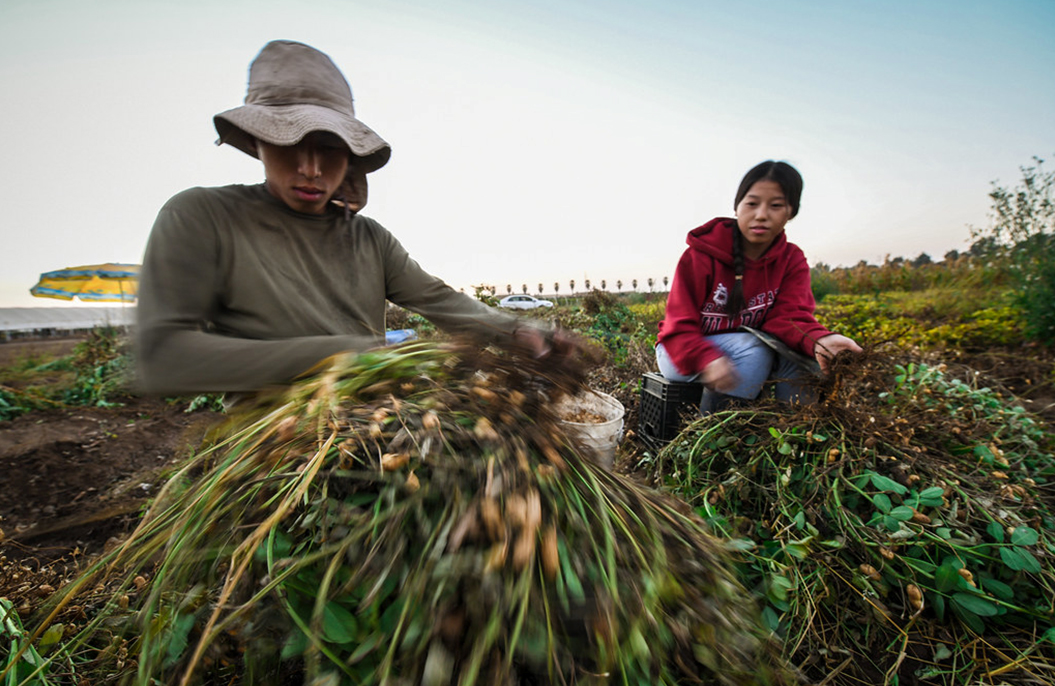
Modern agriculture often feels caught between two worlds: ancestral knowledge passed through generations and digital systems built in laboratories and data centers. Yet these worlds are not opposites.
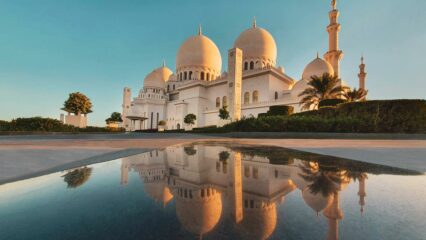 Good Behavior Tips for Expats During Eid Al Adha in the Gulf Region
Eid Al Adha, known as the Festival of Sacrifice, commemorates Prophet Ibrahim’s willingness to sacrifice his son in obedience to God. Below are practical tips to ensure good behavior during Eid Al Adha.
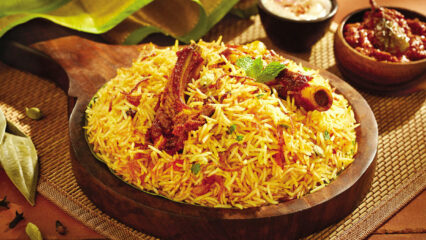 How to Cook a Great Biriyani: A Culinary Journey Through India and the UAE
Biriyani, a fragrant rice dish layered with spiced meat, vegetables, or seafood, is a culinary icon of South Asia, particularly India. This article explores what biriyani is, its regional variations across India, how to cook an authentic biriyani at home, and the best places in the UAE to savor it.
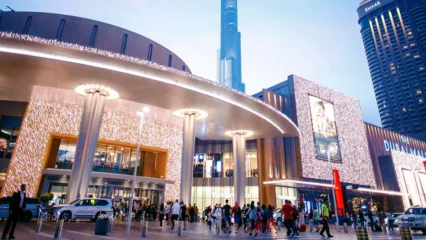 Shopping in the UAE: A Traveler’s Guide to Malls, Markets, and Everyday Convenience
The UAE is a shopper’s paradise, but it’s also incredibly practical for everyday purchases. Here’s a deeper look into how shopping works for travelers in the UAE — from high-end malls to local markets and delivery apps.
The UAE is a shopper’s paradise, but it’s also incredibly practical for everyday purchases. Here’s a deeper look into how shopping works for travelers in the UAE — from high-end malls to local markets and delivery apps.
Dubai has rapidly become a global hub not just for business and luxury, but also for health and wellness. With a strong push toward healthier lifestyles and the rising popularity of alternative medicine, holistic health activities in Dubai are attracting both residents and visitors alike.
The UAE summer is no joke—temperatures can soar above 45°C, and the humidity can make it feel even hotter. Here are eight practical and trendy tips to help you beat the heat and thrive during the UAE’s scorching summer months.