

Cost of Living in Dubai in 2026: A Realistic Guide for Expats
Moving to Dubai in 2026 means trading income tax for high rent, school fees that can rival a university education, and summers that push your electricity bill to uncomfortable heights. This guide breaks down what life actually costs — by category, with real numbers.
The Bottom Line First
A single professional can live comfortably on AED 12,000–18,000 per month. A family of four with school fees and a car should budget AED 30,000–50,000 per month. Rent typically accounts for 35–45% of total spend — it’s where the most variation lives.
Housing: Your Biggest Decision
Where you live in Dubai determines your budget more than any other factor. Prices vary by up to 400% depending on the community you choose. A studio apartment in Downtown Dubai or Business Bay runs around AED 85,000 per year, while the same apartment in Jumeirah Village Circle or Barsha Heights averages AED 55,000. International City remains the most affordable option, with studios from around USD 6,800 annually.
One important practical note: most landlords in Dubai require rent paid via post-dated cheques for the full year, or split into two to four cheques. Monthly payment arrangements are the exception, not the rule.
Utilities (DEWA)
Utility costs vary sharply by season and property size. Studio apartments average AED 400–600 monthly, while larger villas can reach AED 2,000–3,000 during peak summer months when air conditioning runs around the clock. For a one-bedroom apartment, expect to pay between AED 500 and AED 1,200 per month for electricity, water, and cooling combined.
Schools: The Hidden Budget Line
For families, education is often the second-largest expense after rent — and the one that catches newcomers most off guard. As a general guide for the 2025–2026 academic year, foundation stage runs AED 25,000–60,000 per year, primary AED 35,000–75,000, secondary AED 45,000–90,000, and sixth form or IB Diploma up to AED 105,000.
The headline tuition figure rarely reflects the real cost. Once you add the KHDA registration cap, a seat-securing deposit, transport, uniforms, and end-of-year capital fees, a top-tier school can cost an expat family between AED 60,000 and AED 130,000 per child per year. School fee increases are regulated by the Knowledge and Human Development Authority and tied to each school’s inspection rating — so the best schools also tend to be the fastest-growing in price.
Transport
The metro is efficient and affordable, with monthly passes costing AED 300. Ride-hailing fills the gaps, though regular use adds AED 800–1,500 per month. Owning a car adds fuel, insurance, and Salik toll costs — and from June 2026, a new 5% VAT applies on all Salik toll fees and tag activation fees.
Groceries and Dining
Food costs in Dubai are generally lower than in the US or Western Europe. Supermarkets like Carrefour, Lulu, and Spinneys cover all budgets. A single person typically spends AED 800–1,500 per month on groceries, while a family of four can expect AED 2,000–4,000. The variety of dining options at every price point is one of Dubai’s genuine advantages for daily life.
Health Insurance
Health insurance is mandatory for all residents in Dubai — employers are legally required to provide it for employees, but dependants often need to be covered separately. Basic plans for a single adult start around AED 700–1,500 per year; comprehensive family coverage can run AED 10,000–25,000 annually depending on the provider and coverage level.
Is Dubai Still Worth It?
Despite rising rents and school fees, Dubai’s financial case remains strong for most expats. The absence of income tax effectively adds 20–35% to take-home pay compared to most Western countries. According to Mercer’s 2025 Cost of Living Index, Dubai ranks 15th globally — on par with Singapore and London — but unlike those cities, what you earn here, you keep. For professionals and families who plan their budget carefully and choose their neighbourhood wisely, the numbers still work in their favour.
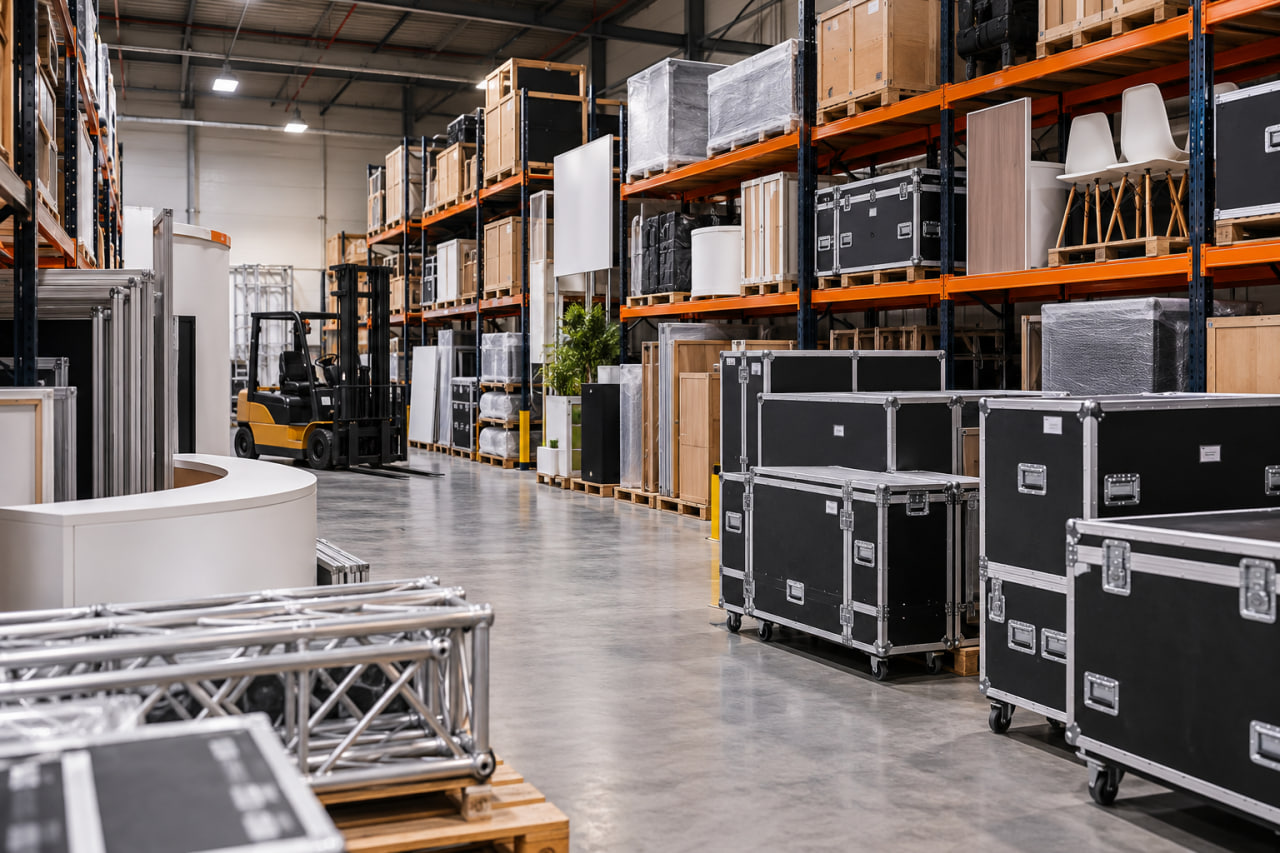
Stands, graphics and AV equipment spend more time in storage than on the show floor. Here is how event companies in Dubai store them safely and get them out fast.
 The UAE’s National Immunization Program: What Parents Need to Know
One of the more reassuring things about raising children in the UAE is how seriously the country takes childhood vaccination.
 Launching an Online Store in the UAE: Licensing and the Logistics That Make or Break It
The UAE e-commerce market has reached a scale that makes it impossible to ignore. The market was valued at USD 8.8 billion in 2024 and is expected to exceed USD 13.8 billion by 2029.
 Freelancing Legally in the UAE: Licenses, Costs, and What Actually Works in 2026
The UAE has built a genuine reputation as one of the best places in the world to freelance, and the numbers back it up. By 2025, the UAE had risen to second place in the global ranking of countries for freelancers and digital nomads, with most of those professionals based in Dubai.
The UAE has built a genuine reputation as one of the best places in the world to freelance, and the numbers back it up. By 2025, the UAE had risen to second place in the global ranking of countries for freelancers and digital nomads, with most of those professionals based in Dubai.
Most expats in the UAE never learn Arabic. English gets you through almost everything in Dubai and Abu Dhabi, and the sheer diversity of the population means that on any given day you might interact with people from twenty different countries without a single Arabic word being exchanged.
Planning to move to Dubai? Here’s a realistic breakdown of the cost of living in Dubai in 2026 — rent by area, school fees, utilities, transport, and health insurance, with actual AED figures.