

Launching an Online Store in the UAE: Licensing and the Logistics That Make or Break It
The UAE e-commerce market has reached a scale that makes it impossible to ignore. The market was valued at USD 8.8 billion in 2024 and is expected to exceed USD 13.8 billion by 2029. E-commerce already accounts for nearly 14.5 percent of Dubai’s retail sales, with an expected compound annual growth rate of 15 percent over the coming five years. That growth has attracted a wave of new sellers, and most of them discover the same thing: getting the legal structure right is the easy part. Getting the logistics right is what actually determines whether the business survives its first year.
You Need a License, and the Wrong One Will Cost You
An e-commerce license authorizes you to sell products, offer services, and open business accounts, and without one, conducting e-commerce activities in the UAE is not permitted. Marketplace platforms enforce this directly — Amazon.ae and Noon require a valid license before listing products or accepting payments. Trying to skip this step is not a viable shortcut. Operating without a valid e-commerce license can get your website or app blocked instantly, trigger heavy administrative fines from economic departments, freeze your corporate bank account during KYC audits, and cause licensed logistics providers to refuse fulfillment contracts.
The harder part is choosing the right type, because the UAE offers several distinct options that suit very different business models.
The E-Trader License is the cheapest entry point by far. Priced at just AED 1,070 through the Dubai Department of Economy and Tourism, it is the most affordable option for small-scale online businesses. It is designed for UAE and GCC nationals running solo online businesses without a physical store or employees, but it does not allow for visa sponsorship or a physical office, making it considerably less flexible than a full e-commerce license — and notably, it is generally not available to foreign nationals on its own.
Free zone e-commerce licenses are where most expat entrepreneurs land. Prices in 2026 range between AED 5,525 and 40,000, with AED 5,525 covering a zero-visa company formation. The license accommodates B2C, B2B, C2C, and C2B models, and free zone companies operating under a standard e-commerce license can legally serve global markets, use Amazon FBA warehouses, and run cross-border dropshipping without importing inventory into the UAE mainland. Free zones offering this option include UAQ Free Trade Zone, RAKEZ, IFZA, Ajman Free Zone, DMCC, Dubai CommerCity, and SHAMS, among others.
Mainland licensing is the right call if your business depends on local distribution. A mainland license is required for companies operating independent warehouses and handling physical goods directly to local UAE consumers. A mainland setup allows businesses to sell directly to customers across the UAE without restrictions, work with local suppliers, operate warehouses, and sell through online and offline channels under the same license. The trade-off is cost: mainland e-commerce licensing through the Dubai Department of Economy and Tourism typically starts from AED 12,000 and can reach AED 25,000 depending on business activities, visa allocation, and office requirements.
The Virtual Company License deserves attention if you do not intend to be physically present in the UAE at all. Designed for overseas investors and non-residents, this license allows e-commerce activities without a physical presence in the country, though it is limited to specific sectors such as computer programming, design, and related services.
What the Advertised Price Never Tells You
The headline figures quoted by free zones rarely represent what you will actually spend. The total cost of launching an operational business comprises the licence, warehouse leasing if required, logistics delivery, marketplace commission fees, corporate banking setup, and residency visa processing including the Emirates ID. Post-launch, operational cash flow must also account for professional bookkeeping and corporate tax compliance.
It is also worth knowing that free zones are registries, not operational partners. While free zones market comprehensive setup packages with visas and minimal infrastructure, they operate strictly as corporate registries and do not assist with the operational side of the business — fulfillment, customer service, and delivery are entirely on you to arrange.
Selling Digital Products or Services Specifically
If your business is software, online courses, or other digital goods rather than physical inventory, the licensing picture simplifies considerably. A standard free zone e-commerce license is fully sufficient for distributing software, SaaS, online courses, or digital assets globally. However, if your business model introduces complex financial elements such as peer-to-peer money transfers or escrow functions, additional regulatory approval from the Central Bank of the UAE becomes necessary.
The Logistics Decision That Actually Determines Your Margins
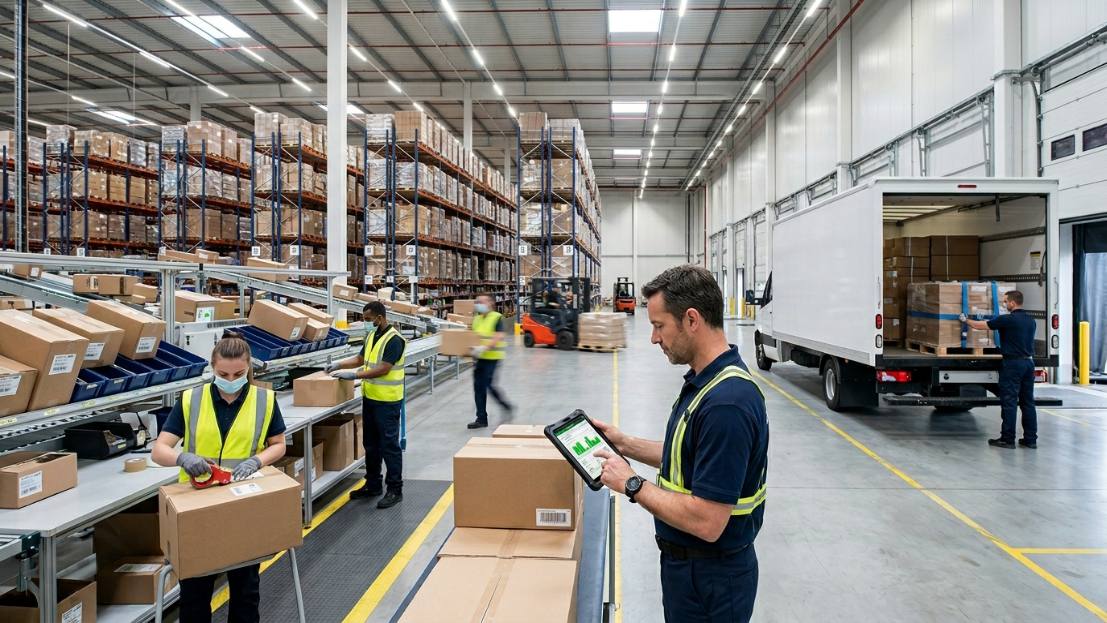
Once the legal structure is sorted, the real strategic decision is how you get products from supplier to customer — and this is where most new UAE sellers either build a sustainable business or quietly bleed margin without realising why.
Fulfillment by Amazon and Noon’s equivalent (FBN) remain the most algorithmically rewarded options for marketplace sellers. Using FBA can meaningfully enhance Buy Box optimisation for Amazon.ae sellers, with up to a 30 percent increase observed compared to fulfillment-by-merchant operations. But this model recently became more demanding for sellers. Amazon stopped doing FBA prep as of January 2026, meaning UAE sellers now bear full responsibility for prep work that the platform previously handled. Inventory needs to arrive already labelled, polybagged, and bundled correctly, or it risks rejection at the fulfillment centre.
Third-party logistics providers (3PL) offer more control at the cost of more complexity. A 3PL arrangement involves fixed warehouse rent, SLA penalties, and integration or API costs, but provides flexibility for bundling or direct-to-consumer orders that FBA-style models do not. Fulfillment costs in the UAE through 3PL providers typically range from AED 3 to 15 per unit for pick-and-pack, plus AED 10 to 30 per domestic shipment, with total per-order fulfillment cost for a standard SMB brand usually landing between AED 20 and 45.
Major UAE 3PL providers include Aramex, DHL, Ceva Logistics, and UPS for cross-border enterprise reach, while Farfill — a Dubai-based 3PL founded in 2010 and acquired by Noon in 2017 — now operates as the dedicated fulfillment backbone for Noon marketplace sellers across fashion, beauty, electronics, and home categories specifically.
The China-to-UAE dropshipping model, long a default for newer sellers, has become considerably less viable. The classic China-to-UAE dropshipping model is broken in 2026, as customer expectations have reset to one-to-three-day delivery, making the UAE-local 3PL dropshipping model the practical fix — meaning inventory now needs to be held locally rather than shipped per-order from overseas.
What Customers Actually Expect Now
Delivery speed has become a genuine competitive battleground rather than a nice-to-have. Amazon Now, a fifteen-minute delivery service built around compact, tech-enabled micro fulfillment centres embedded directly within neighbourhoods, has launched across major UAE cities, with daily orders growing more than 40 percent month over month and Prime members doubling their shopping frequency after adopting it.
That pace sets the benchmark every other seller is now measured against, even if matching it directly is not realistic for a smaller operation. UAE consumers increasingly expect next-day or even same-day delivery, especially through Prime or Noon Express, and understanding SLA benchmarks by sales channel is essential for aligning fulfillment strategy with what customers have come to expect. Maintaining a delivery SLA of 95 percent or higher is treated as an essential metric, since it directly affects ranking on both Amazon and Noon’s algorithms.
Cash on Delivery Is Still a Major Factor
One detail that catches international sellers off guard is just how dominant cash on delivery remains in the UAE market. COD still accounts for roughly 30 percent of UAE e-commerce orders, the return-to-origin rate sits around 20 percent, and the reconciliation cycle delays cash by roughly fourteen days. Building a financial model that assumes instant, fully prepaid revenue will not match reality here. Budgeting for that delay, and for a meaningful proportion of orders that never complete, is part of operating honestly in this market rather than a pessimistic worst case.
Putting It Together
The UAE rewards e-commerce sellers who treat licensing and logistics as a single decision rather than two separate problems to solve in sequence. A free zone licence chosen without thinking through fulfillment ends up forcing an expensive restructure later. A logistics setup chosen without understanding the licence’s restrictions on local distribution can leave a seller unable to reach the customers they actually want.
The businesses succeeding in this market right now are the ones that picked a licensing structure matched to a specific fulfillment model from day one — mainland and local 3PL for sellers targeting direct UAE distribution, free zone and FBA-style fulfillment for sellers building toward a regional or global marketplace presence — rather than choosing the cheapest licence first and figuring out delivery afterward.
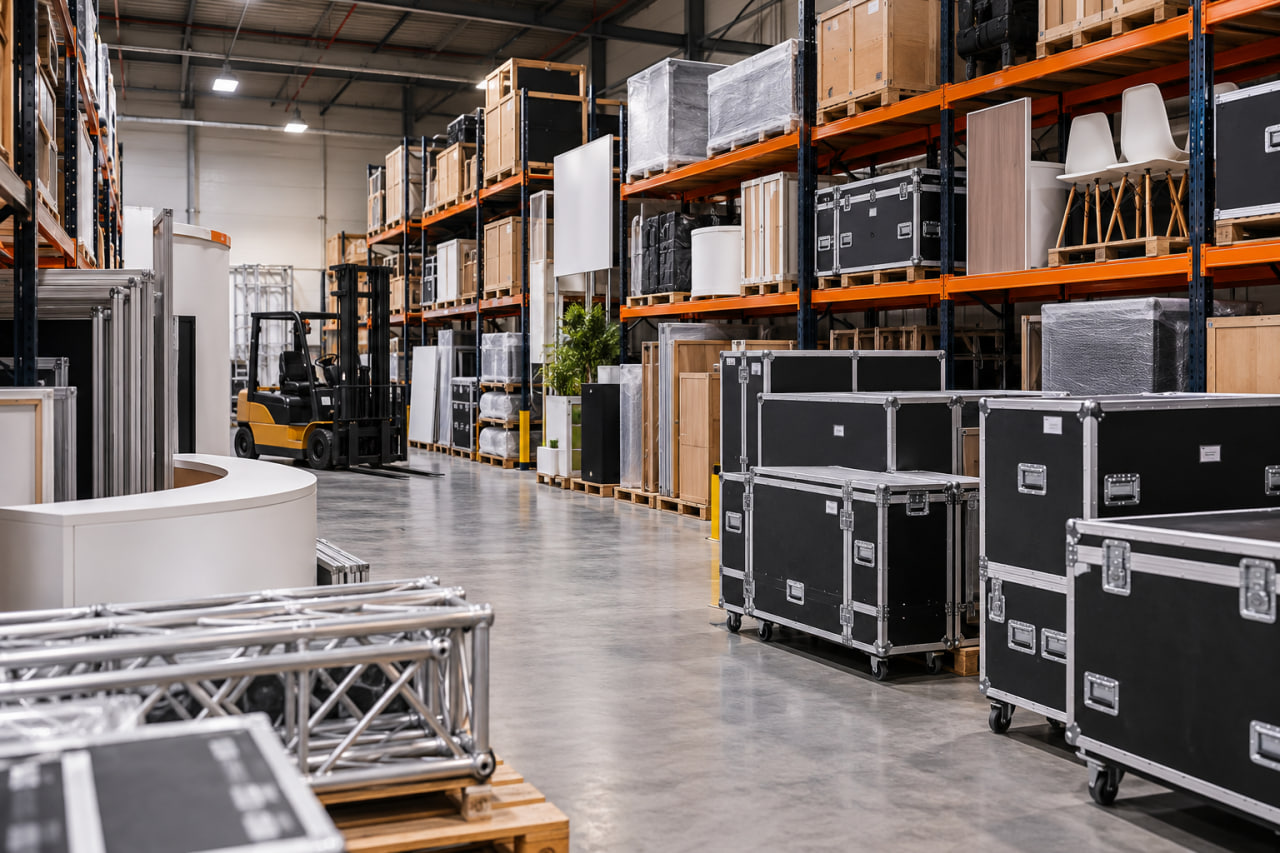
Stands, graphics and AV equipment spend more time in storage than on the show floor. Here is how event companies in Dubai store them safely and get them out fast.
 Freelancing Legally in the UAE: Licenses, Costs, and What Actually Works in 2026
The UAE has built a genuine reputation as one of the best places in the world to freelance, and the numbers back it up. By 2025, the UAE had risen to second place in the global ranking of countries for freelancers and digital nomads, with most of those professionals based in Dubai.
 The UAE Has Lowered the Age of Adulthood to 18: What It Means in Practice
For most of the world, eighteen is the age at which a person becomes a legal adult.
 Cross-border E-commerce: How UAE Businesses Thrive with Payoneer
Having the right payment infrastructure in place makes a big difference. With Payoneer cross-border payments, UAE businesses finally have a digital payment solution to help them operate across borders.
Having the right payment infrastructure in place makes a big difference. With Payoneer cross-border payments, UAE businesses finally have a digital payment solution to help them operate across borders.
If you’re planning to build or scale a company in Dubai, working with a notary will become a routine part of your legal and administrative process.
Modern agriculture often feels caught between two worlds: ancestral knowledge passed through generations and digital systems built in laboratories and data centers. Yet these worlds are not opposites.